
10 things nobody tells you before visiting Himachal Pradesh
Everyone tells you Himachal Pradesh is beautiful. Nobody tells you what to actually expect when you get there.
They show you the Instagram photos - snow peaks, café terraces in Kasol, monks in Spiti, apple orchards in Kinnaur. What they do not show you is the four-hour traffic jam before Manali on a Friday night, the landlord who has no idea what Wi-Fi means, or the mountain road that looks perfectly manageable on Google Maps and turns out to be a one-lane dirt track shared with a glacier.
Himachal Pradesh is one of the most extraordinary places in India. It is also one of the most humbling. And the travelers who enjoy it most are the ones who show up knowing what they are actually getting into.
Here are 10 things nobody tells you before you go.
1. The mountains will make you feel things you were not prepared for
This sounds dramatic until it happens to you. There is something about arriving at 4,000 metres above sea level - the silence, the scale, the complete absence of anything familiar - that cracks something open in even the most composed traveler. People cry at Chandratal Lake for no reason they can explain. People sit at the Kunzum Pass and stare at nothing for forty minutes. Himachal Pradesh has a way of making the noise inside your head go very, very quiet. Pack for that. It is not on any packing list anywhere.
2. Altitude sickness is real and it does not care how fit you are
You can run marathons, do daily yoga, and bench press your own bodyweight and Himachal's altitude will still floor you if you climb too fast. Spiti Valley sits between 3,800 and 4,500 metres. Rohtang Pass is over 3,900 metres. The symptoms - headache, nausea, dizziness, shortness of breath - hit without warning and hit hard.
The rule is simple and non-negotiable: ascend slowly, drink water constantly, eat light for the first 48 hours, and do not push through warning signs. Diamox helps but is not a substitute for acclimatisation. Do not rush the mountains. The mountains are not in a hurry and they are significantly more powerful than your itinerary.
3. Roads in Himachal are a completely different category of road
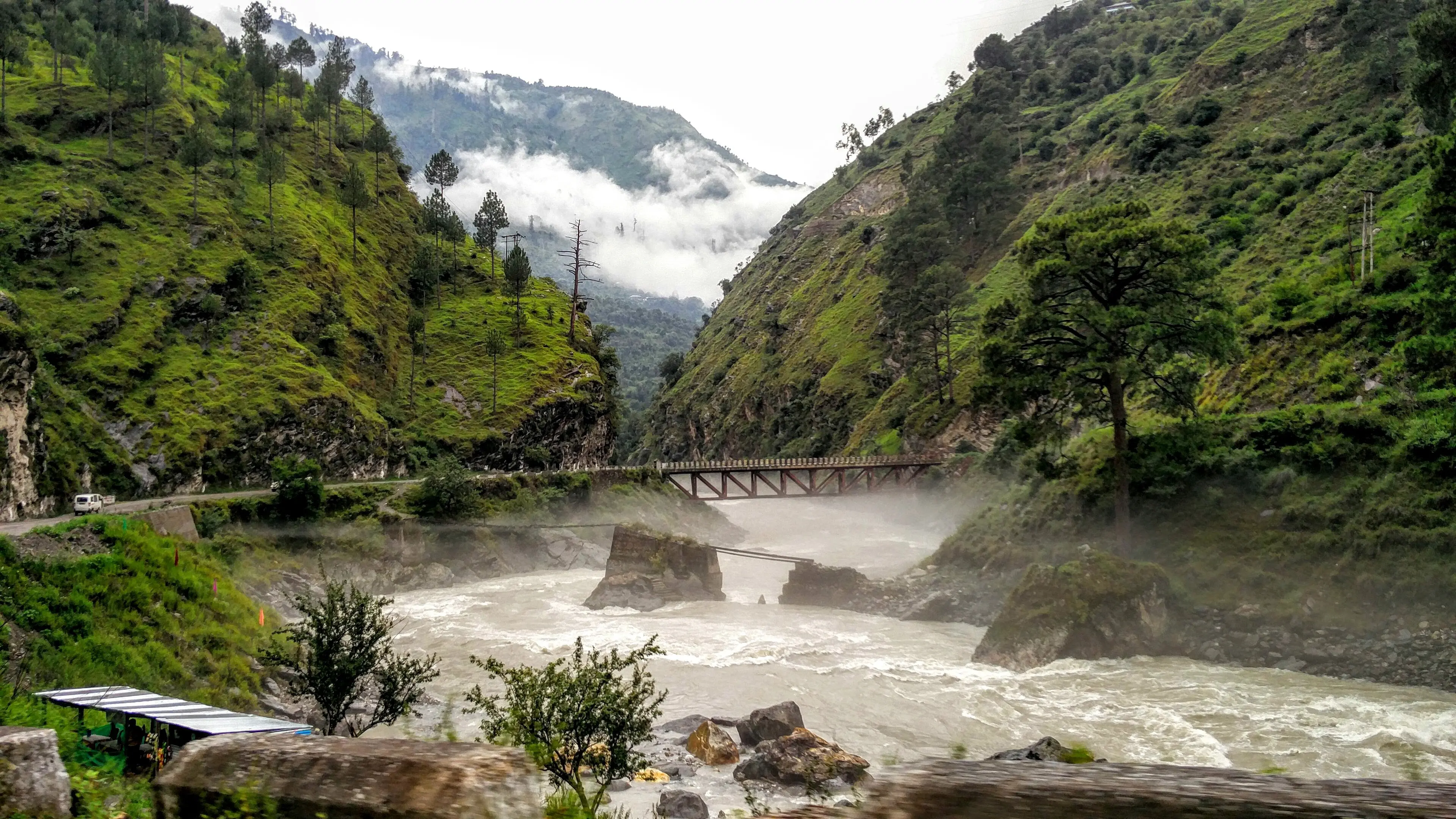
When someone tells you the drive from Manali to Kaza takes eight to ten hours, they are not being dramatic. They are describing a route that climbs over three high-altitude passes, crosses rivers on single-lane bridges, and passes through sections of road that are rebuilt every single year after the snowmelt destroys them. The Rohtang Pass and Atal Tunnel route has improved dramatically but the inner roads of Spiti, Kinnaur and Chamba remain genuinely demanding.
Hire a local driver who knows these roads rather than self-driving if you are unfamiliar with mountain terrain. Your Innova driver from Delhi has driven on highways his entire career. That is a completely different skill set from navigating a boulder field at 4,200 metres in the dark.
4. The weather can change your entire trip in two hours
Himachal Pradesh weather does not consult your plans. A clear blue morning in Kaza can become a whiteout blizzard by afternoon. The Rohtang Pass closes without notice when snow falls. Entire valley roads get blocked by landslides during monsoon - which runs from July through early September and turns large sections of the state into a beautiful, inaccessible, completely spectacular mess.
Check road conditions every single morning before you travel. Follow the Himachal Pradesh Road Traffic updates and ask your guesthouse owner, not Google. The person who slept in the valley last night knows more about what is passable today than any app on your phone.
5. Spiti Valley is not Manali with better views
Half the travelers who visit Spiti arrive expecting a prettier, quieter version of Manali. They are not prepared for what Spiti actually is - a high-altitude cold desert that looks more like Tibet or the surface of the moon than anything they associate with India. There are no trees for long stretches. Villages are separated by hours of empty roads. Electricity is intermittent. Mobile signals disappear for days at a time.
This is not a complaint. This is the point. Spiti is one of the last genuinely remote landscapes in India and it is extraordinary precisely because it has not been smoothed out for convenience. But arrive knowing what it is. It is not a holiday. It is an expedition.
6. The food in the mountains is nothing like the rest of India
Forget paneer butter masala and dal makhani. In Spiti and upper Kinnaur you are eating Tibetan food - thukpa noodle soup, tsampa barley porridge, momos stuffed with yak cheese, butter tea that tastes aggressively unfamiliar the first time and completely essential by the third. In Dharamshala and McLeod Ganj the food is a fascinating collision of Tibetan, Israeli, and north Indian influences that should not work and absolutely does.
In smaller villages your guesthouse owner cooks whatever they have available that day. This is not a problem. Some of the best meals in Himachal Pradesh happen at wooden tables with no menu, no candle, and a dal that has been cooking since morning.
7. Permits are required and they are not optional
Several areas of Himachal Pradesh - particularly in Spiti, parts of Kinnaur bordering Tibet, and the Pin Valley - require Inner Line Permits for Indian nationals and Restricted Area Permits for foreign travelers. Getting caught without one is not a minor inconvenience. It is a significant problem in a place where the nearest authority is sometimes four hours away.
Apply for permits in advance through the official Himachal Pradesh government portal or through a registered local travel agent. Carry physical copies everywhere. The checking points appear when you least expect them and they are thorough.
8. Locals here will be the highlight of your entire trip
Nobody prepares you for the warmth of Himachal's mountain communities. A Spitian family inviting you in for butter tea because you stopped to look at their barley field. A monastery monk in Tabo spent forty-five minutes explaining 1,000-year-old murals to a stranger with no appointment and no charge. A guesthouse owner in Chitkul sitting with you at 10pm sharing local wine and stories about what the valley looked like before the road came.
Himachal Pradesh's people carry a quiet generosity that has nothing to do with tourism and everything to do with a culture that has survived at altitude for centuries by looking after one another. Slow down enough to notice it. It is the best thing about the entire state.
9. Budget travel here looks completely different from the rest of India
Himachal Pradesh is significantly more expensive than the plains - and significantly better value than anything the experience is actually worth. Guesthouses in Kaza or Kalpa run between Rs 600 and Rs 1,500 per night for clean, warm rooms with home-cooked meals included. A full day of trekking with a local guide costs a fraction of what the same experience would in Nepal or Bhutan.
But carry cash. ATMs in Spiti and upper Kinnaur are rare, frequently out of service, and sometimes simply absent for stretches of four or five days. Withdraw enough in Manali or Reckong Peo to cover your entire time in the remote zones. This is not the part of India where a digital wallet saves the day.
10. Himachal Pradesh will ruin other mountain destinations for you permanently
This is the thing nobody warns you about and everyone discovers too late. After Spiti, Manali feels like a city. After Kinnaur, other mountain roads feel flat. After watching the sunrise hit the Dhankar Monastery from a ridge above a turquoise lake at 4,100 metres, most other sunrise spots feel like a compromise.
Himachal Pradesh sets a standard that is almost unfair to everywhere else. The mountains here are too large. The sky is too clear. The silence is too complete. The food is too good. The people are too generous.
You will come back. Every single traveler who goes says they will come back. And most of them actually do.
Plan your Himachal Pradesh trip with our mountain travel specialists - custom itineraries for first-timers, trekkers, road trippers and anyone who has been staring at photos of Spiti for six months and finally decided enough is enough.