
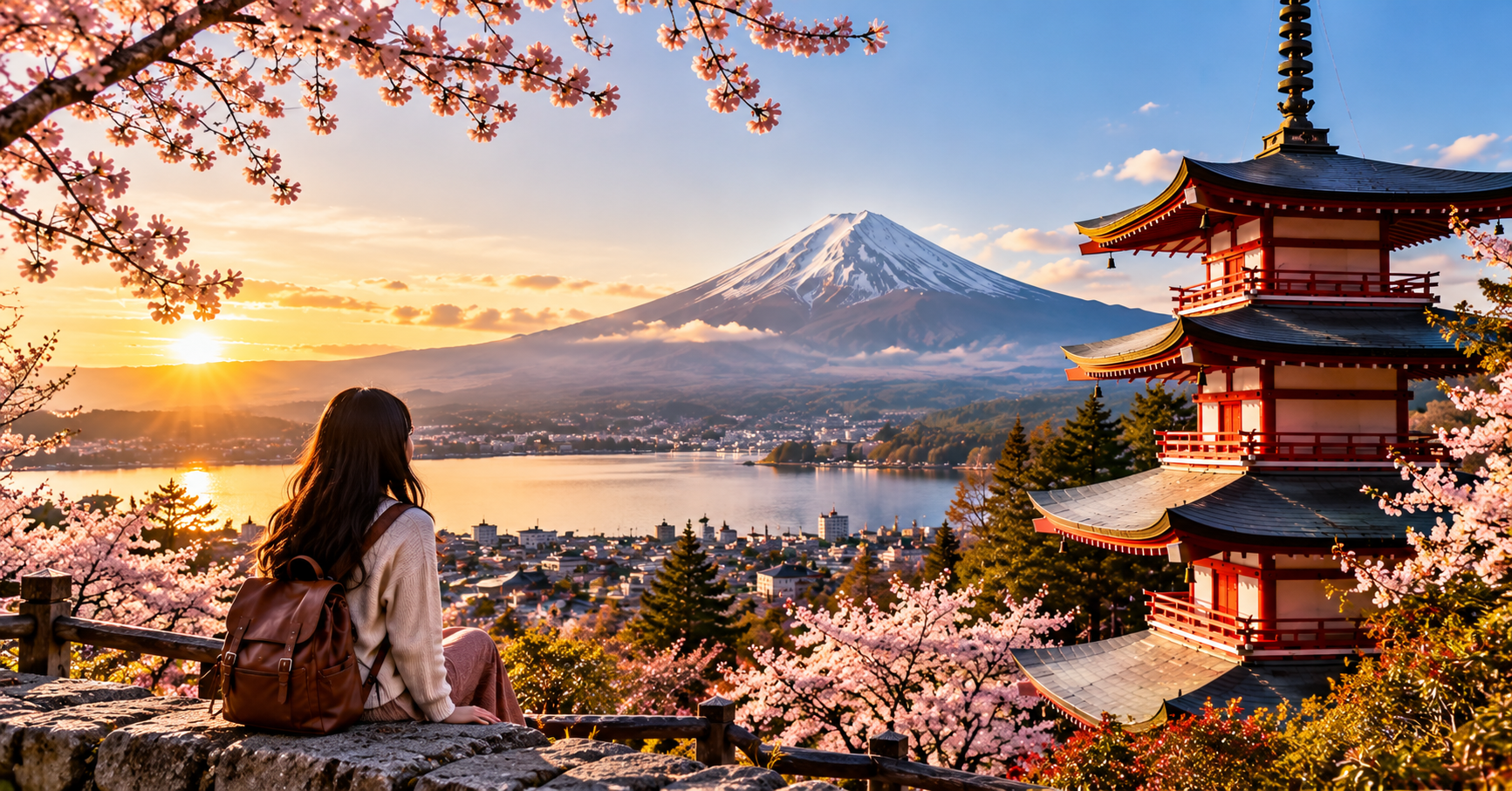
Japan from India: A Practical Guide to Planning Your First Trip
Japan brings together futuristic cities, centuries old temples, mountain landscapes, seasonal beauty and a food culture that deserves its own itinerary. For Indian travellers, it is also a destination where planning the route properly can make a significant difference to both the experience and the budget.
If you are considering a Japan trip from India, this guide covers the essentials, including when to go, visa planning, estimated costs, transport, a practical first trip itinerary and useful tips for Indian travellers.
Why Japan Is Worth Adding to Your Travel List
Japan offers a remarkable contrast between old and new.
You can spend a morning exploring historic temples in Kyoto, take a high speed train to another city, enjoy Tokyo's modern neighbourhoods in the evening, and wake up the next day with views of Mount Fuji.
The experience is not limited to famous attractions either. Traditional gardens, neighbourhood restaurants, hot spring towns, seasonal festivals and smaller cities can add a more personal dimension to a Japan holiday.
For Indian travellers, Japan can also work well as a structured multi city trip because its major cities are connected by an extensive rail network.
Best Time to Visit Japan
There is no single best time to visit Japan for every traveller. Japan has four distinct seasons, and each offers a different experience.
Spring, March to May
Spring is popular for cherry blossoms and generally comfortable sightseeing weather. Cherry blossom timing varies considerably by region, with the season moving from southern Japan towards the north.
If seeing sakura is your priority, plan around the specific cities you want to visit rather than assuming the entire country blooms at the same time.
Summer, June to August
Summer brings festivals, fireworks and outdoor activities, but much of Japan can be hot and humid. Typhoon activity can also affect travel plans later in the season.
Autumn, September to November
Autumn is a strong choice for travellers interested in comfortable sightseeing and colourful foliage. In central Japan, autumn colours are particularly prominent from around mid November into early December, although timing varies by region and altitude.
Winter, December to February
Winter is ideal if your priorities include snow, skiing, winter landscapes or hot springs. Northern Japan experiences substantially colder conditions and heavier snowfall than Tokyo and Osaka.
Planning tip: If your priority is cherry blossoms or autumn foliage, build your dates around regional forecasts rather than relying only on a general seasonal calendar.
Japan Visa for Indian Travellers
Indian nationals require a visa to enter Japan. The Japan National Tourism Organization specifically directs Indian travellers to the relevant Japanese diplomatic mission for visa information.
Japan's eVISA system is available to people residing in India for eligible short term tourism applications, with applications facilitated through accredited channels.
As of July 1, 2026, the Embassy of Japan in India lists a visa fee of ₹500 for Indian nationals, with a VFS service fee also applicable. The embassy advises travellers to plan well in advance because processing times can vary. Applications can be accepted from three months before the intended travel date.
Before applying, check the latest requirements with the Japanese mission or authorised visa application centre serving your place of residence.
Japan Trip Cost from India
The Japan trip cost from India depends heavily on your departure city, season, accommodation, number of cities and travel style.
Current 2026 travel estimates published by travel planning sources put a 7 to 10 day Japan trip broadly around ₹1.2 lakh to ₹2.5 lakh or more per person, with premium travel costing substantially more. These are planning estimates rather than fixed package prices.
Main expenses to budget for
| Expense | What affects the cost |
|---|---|
| International flights | Departure city, season, airline and booking date |
| Hotels | Location, room type and travel season |
| Transport | Local trains, metro, buses and intercity Shinkansen |
| Food | Convenience stores, casual restaurants or premium dining |
| Attractions | Museums, observation decks, theme parks and guided experiences |
| Visa | Current government fee plus applicable service charges |
| Insurance | Duration and coverage |
| Shopping | Highly dependent on personal preferences |
For a first trip, a 7 to 10 day mid range itinerary covering Tokyo, Mount Fuji, Kyoto and Osaka is a useful starting point for budgeting.
Do not treat online cost estimates as quotes. Airfares, hotel rates and exchange rates can change significantly between booking dates.
How to Travel Around Japan
Japan's transport system is one of the most important parts of planning your itinerary.
Shinkansen for intercity travel
The Shinkansen connects major cities quickly and comfortably. It can make a multi city itinerary practical without spending large portions of your holiday in transit.
However, do not automatically purchase a nationwide Japan Rail Pass. Compare the cost of your actual train journeys against individual tickets and regional passes before buying.
IC cards for local transport
For everyday travel in cities, rechargeable IC cards can make metro, train and bus journeys much simpler where supported.
A good strategy is to use local transport for city exploration and reserve longer distance rail travel for intercity journeys.
Keep your itinerary geographically sensible
Avoid adding too many cities simply because they appear on a Japan bucket list.
For a first trip, Tokyo, Mount Fuji, Kyoto and Osaka already provide a strong combination of modern Japan, traditional culture, nature and food.
A Practical 7 Day Japan Itinerary
If you are looking for a Japan itinerary for 7 days, this route provides a balanced introduction.
Days 1 to 3: Tokyo
Spend your first three days exploring Tokyo.
Depending on your interests, consider areas such as Asakusa, Shibuya, Shinjuku and Ginza. Mix major attractions with neighbourhood exploration rather than filling every hour with sightseeing.
Day 4: Mount Fuji or Hakone
Use a day for Mount Fuji views or a Hakone experience.
Lake Kawaguchiko is particularly attractive for travellers looking for classic Mount Fuji scenery. JNTO also highlights the area as a destination for views of Fuji and seasonal landscapes.
Days 5 and 6: Kyoto
Travel to Kyoto and explore its temples, traditional neighbourhoods and gardens.
Start early for popular attractions and leave some time for slower experiences, such as walking through historic streets or visiting quieter gardens.
Day 7: Osaka
Finish with Osaka for its food culture, lively neighbourhoods and city atmosphere.
If your flight schedule permits, you can extend the trip and explore Osaka more thoroughly rather than rushing back to Tokyo.
Where Should Indian Travellers Go in Japan?
Tokyo
Best for first time visitors, shopping, technology, food, entertainment and contemporary Japanese culture.
Kyoto
Best for temples, gardens, traditional architecture and historic neighbourhoods.
Osaka
Best for food, nightlife, shopping and a more energetic urban atmosphere.
Mount Fuji and Hakone
Best for mountain scenery, lakes, hot springs and a slower break from the major cities.
Hiroshima
Worth considering if you have additional days and want to explore an important part of Japan's modern history.
Practical Japan Travel Tips for Indians
Plan vegetarian and dietary requirements in advance
Vegetarian travellers should not assume that a dish is vegetarian simply because it does not contain visible meat. Ingredients such as fish based stock can appear in soups, sauces and other dishes.
Research restaurants in advance and communicate dietary requirements clearly.
Carry some Japanese yen
Cards are widely used, particularly in larger cities, but carrying some cash remains useful for smaller businesses and certain local experiences.
Download essential travel apps
Have your maps, translation tools, accommodation details and transport information available before leaving India.
It is also useful to keep offline copies of important booking information.
Register your arrival information
Japan Customs recommends using Visit Japan Web for electronic customs declarations, and the service can also be used to register information for immigration procedures.
Japan Customs has also warned travellers about fraudulent websites pretending to provide Visit Japan Web services. The official service is free, so avoid websites asking for payment to create the required customs declaration.
Respect local etiquette
Japan rewards travellers who pay attention to their surroundings.
Keep conversations quiet on public transport, queue properly, follow photography restrictions, and observe etiquette at temples and shrines.
Small cultural details can make the experience more comfortable for both visitors and residents.
What to Pack for Japan
Your packing list should depend on the season and regions included in your itinerary.
For most trips, consider:
- Comfortable walking shoes
- Layered clothing
- Universal travel adapter
- Portable power bank
- Compact umbrella
- Travel insurance documents
- Passport and visa documentation
- Some Japanese yen
- Prescription medicines and relevant documentation
- A small day bag for sightseeing
If travelling during spring or autumn, layers are particularly useful because temperatures can vary during the day.
Is Japan Suitable for a First International Trip?
Japan can be a rewarding first international destination, but it benefits from advance planning.
The biggest learning curve is usually not sightseeing. It is understanding the transport system, choosing accommodation close to useful stations, planning the right number of cities and preparing for cultural differences.
A well paced itinerary is generally more enjoyable than trying to cover Tokyo, Kyoto, Osaka, Hiroshima, Mount Fuji and several other destinations in a single week.
For your first Japan tour package, prioritise the experiences that matter most to you and build the route around them.
How to Make Your Japan Trip More Memorable
Instead of treating Japan as a checklist of attractions, leave room for experiences.
Have a meal in a small local restaurant. Spend an evening walking through a neighbourhood without a fixed sightseeing schedule. Stay in a traditional ryokan if it fits your budget. Visit a garden early in the morning. Take a slower train journey through a scenic area.
Japan's appeal is often found between the major attractions.
Planning a Japan trip from India is easier when your route, season, budget and travel style are decided before you start booking.
For current visa requirements, always verify the latest information with the Japanese authorities. For flights and accommodation, compare prices for your exact dates rather than relying on generic online estimates.
Travel Unbounded currently presents Japan among its expanded international journey portfolio, while its public destination collection provides the starting point for exploring available international journeys and planning support.
Ready to plan your Japan trip from India? Explore Travel Unbounded's international destinations and speak with the team about creating a personalised journey around your dates, interests and budget.