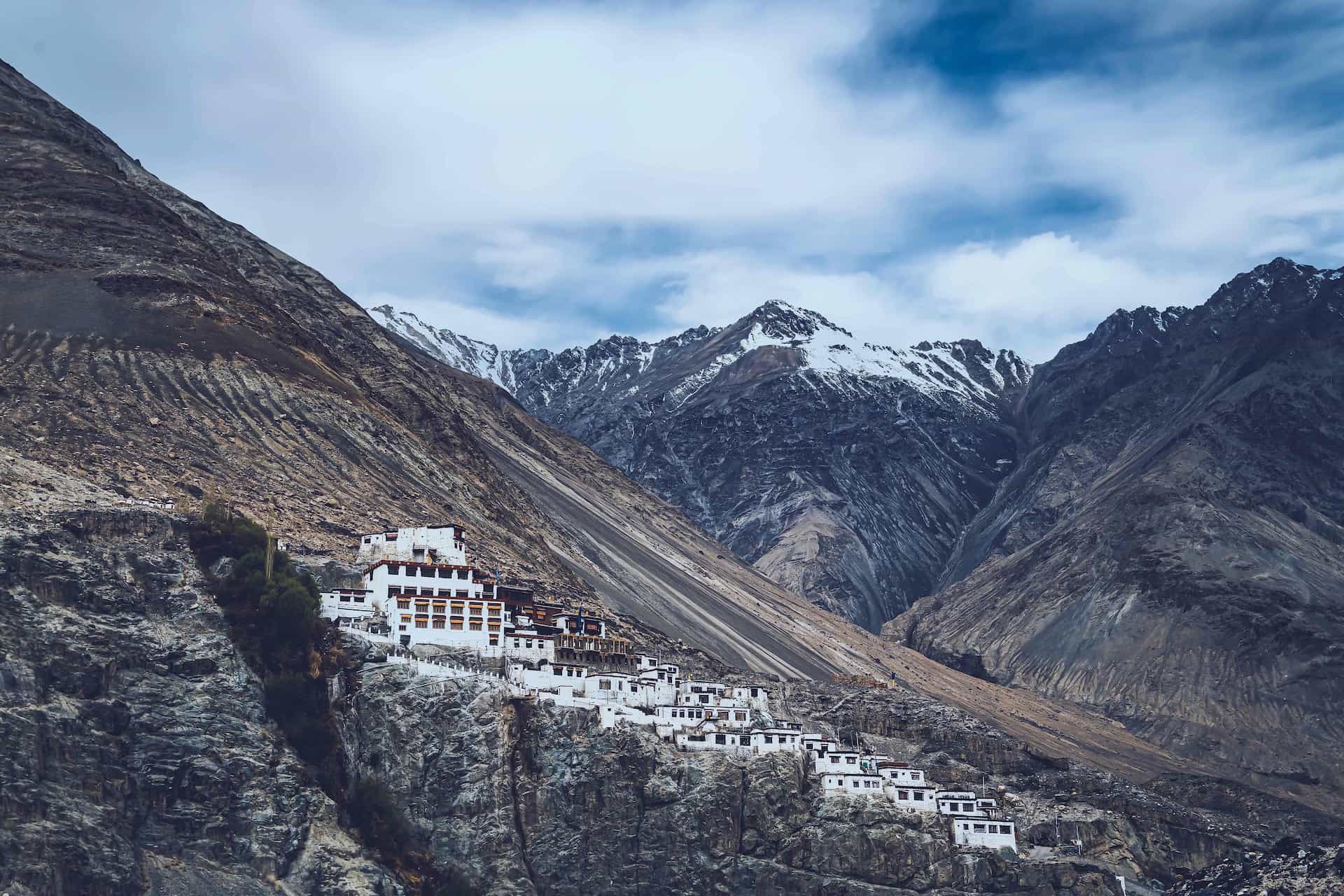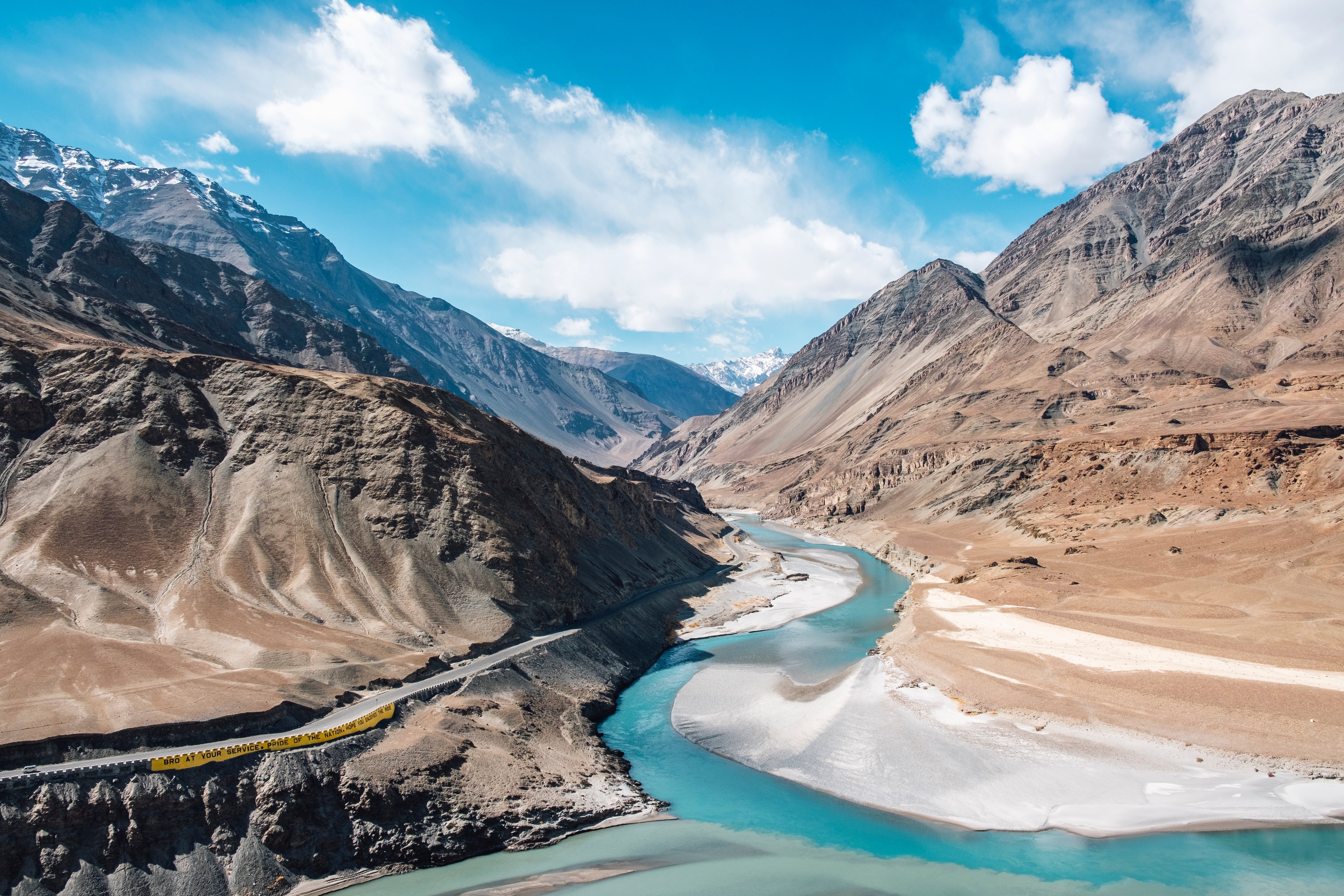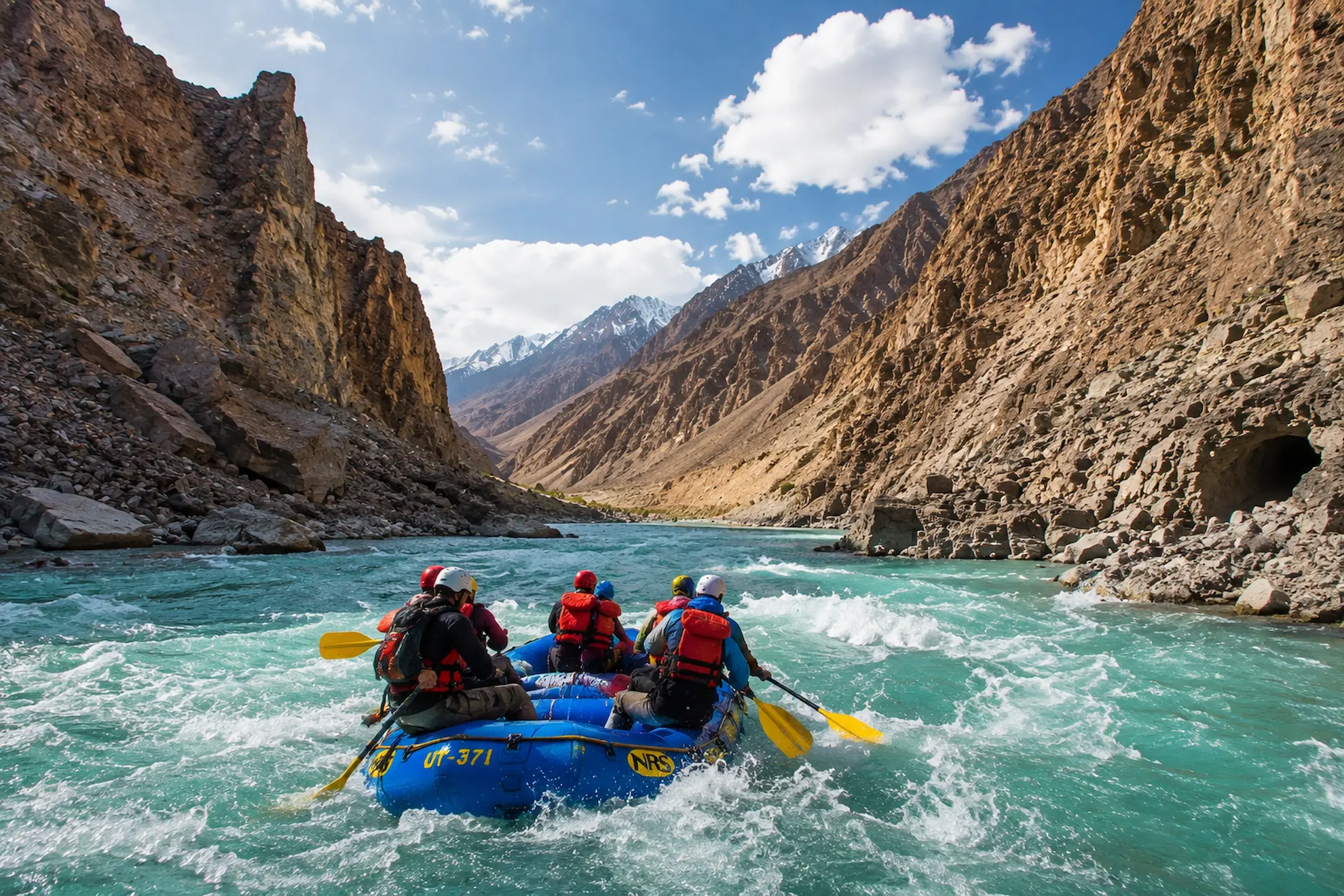
Ladakh sits between 11,000 and 18,000 feet — a cold desert where the Indus carves valleys between Himalayan giants. It was closed to outsiders until 1974. In a little over 50 years, it has become one of the world's most coveted travel destinations. Not for luxury. For the sheer force of what it looks like and how it makes you feel.
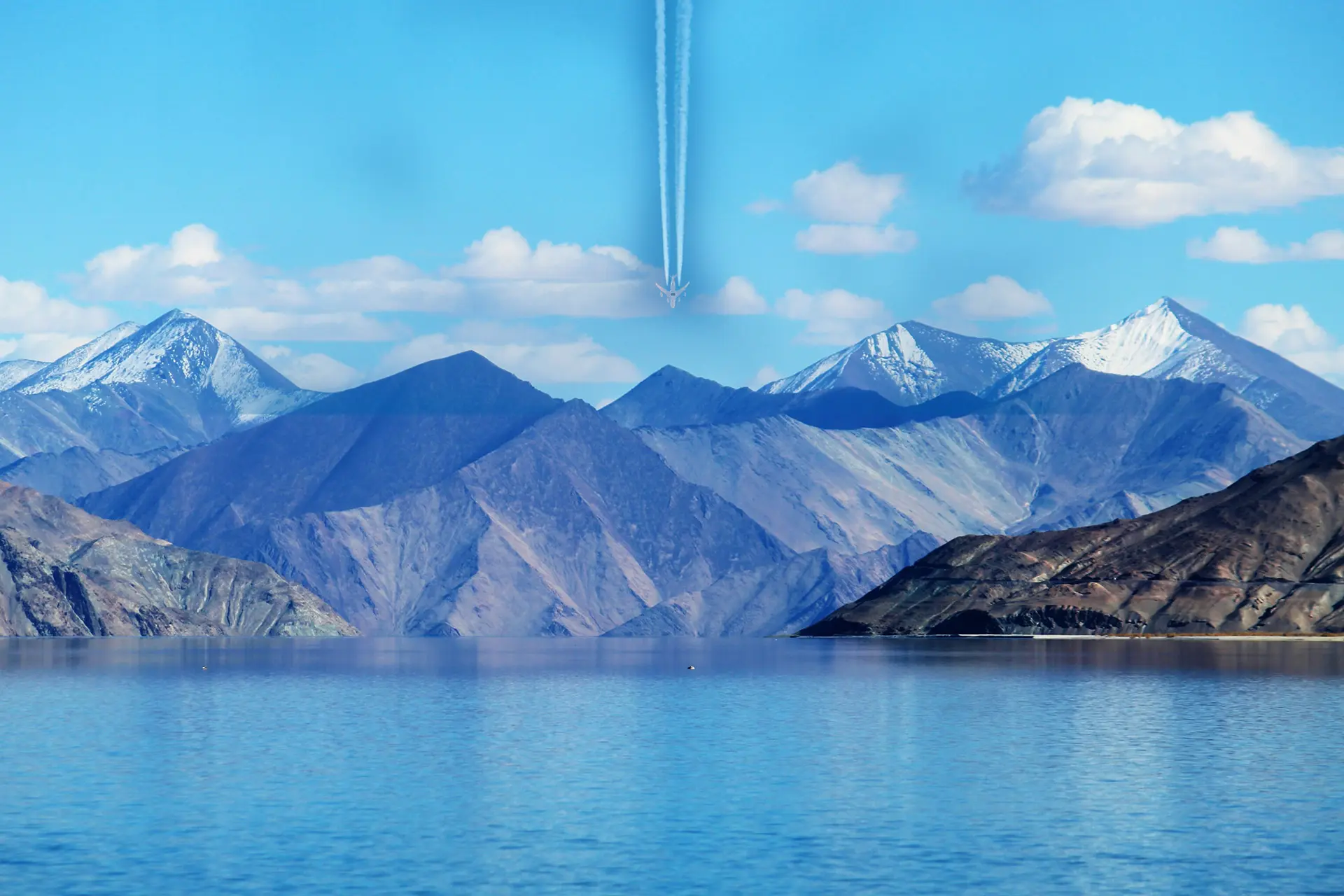
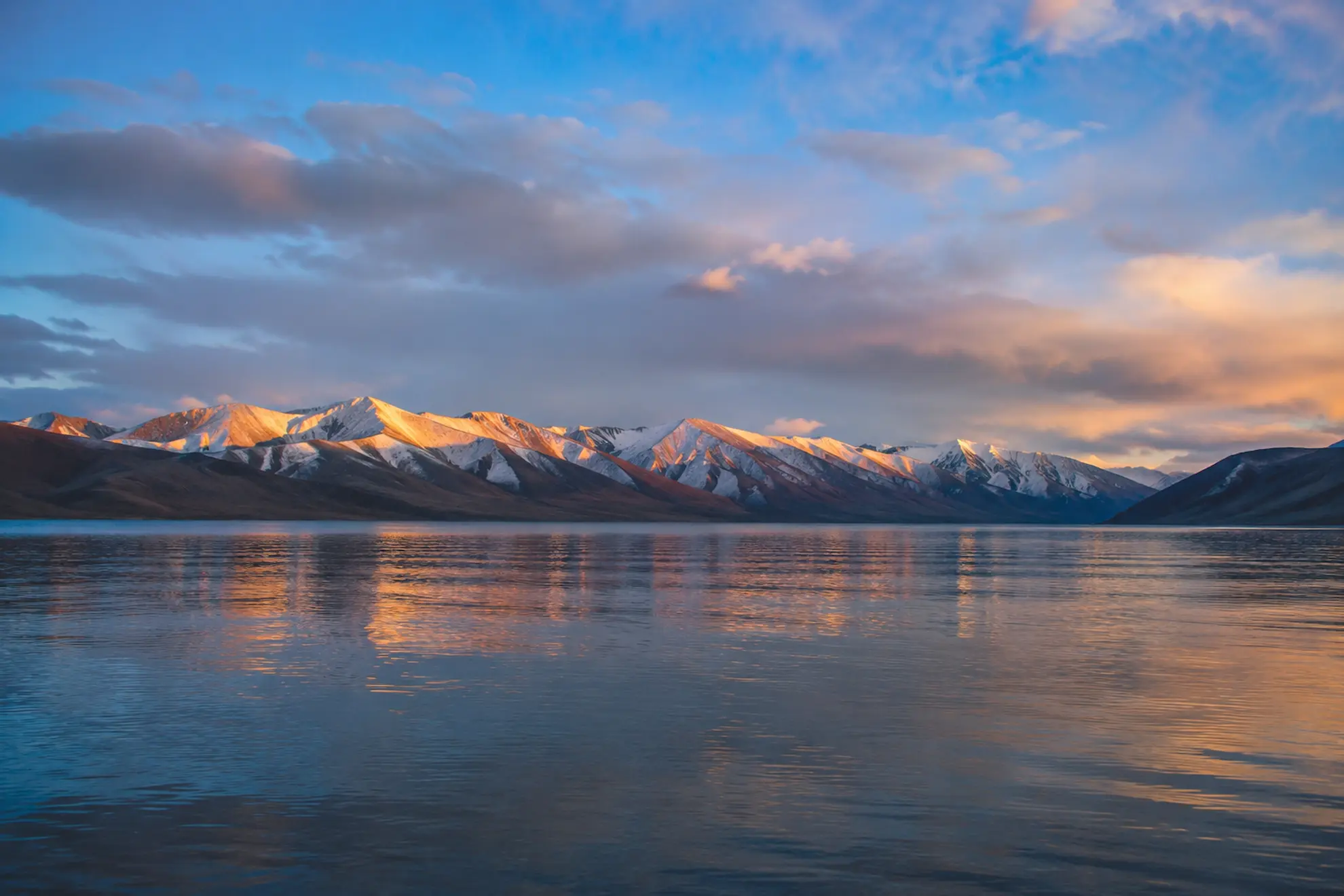
Pangong Tso sits at 14,270 feet and stretches 134 km into Tibet. Its colour shifts hour by hour — steel blue at dawn, aquamarine at noon, deep indigo by dusk. No photograph adequately prepares you for it.
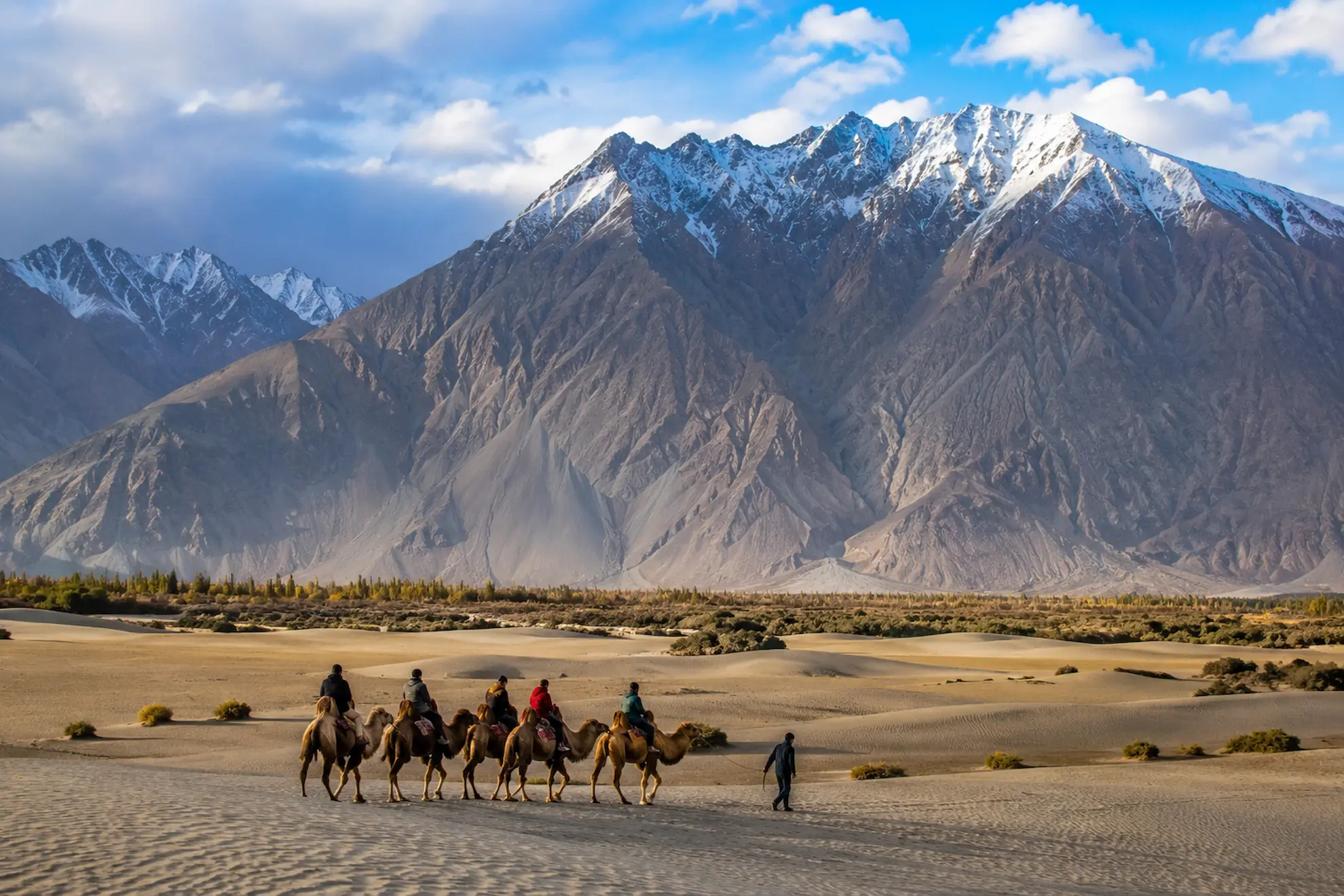
Nubra Valley is the geographic improbability at the heart of Ladakh — sand dunes at 10,000 feet, framed by 6,000-metre peaks and home to the double-humped Bactrian camel. The world makes no sense here in the best possible way.
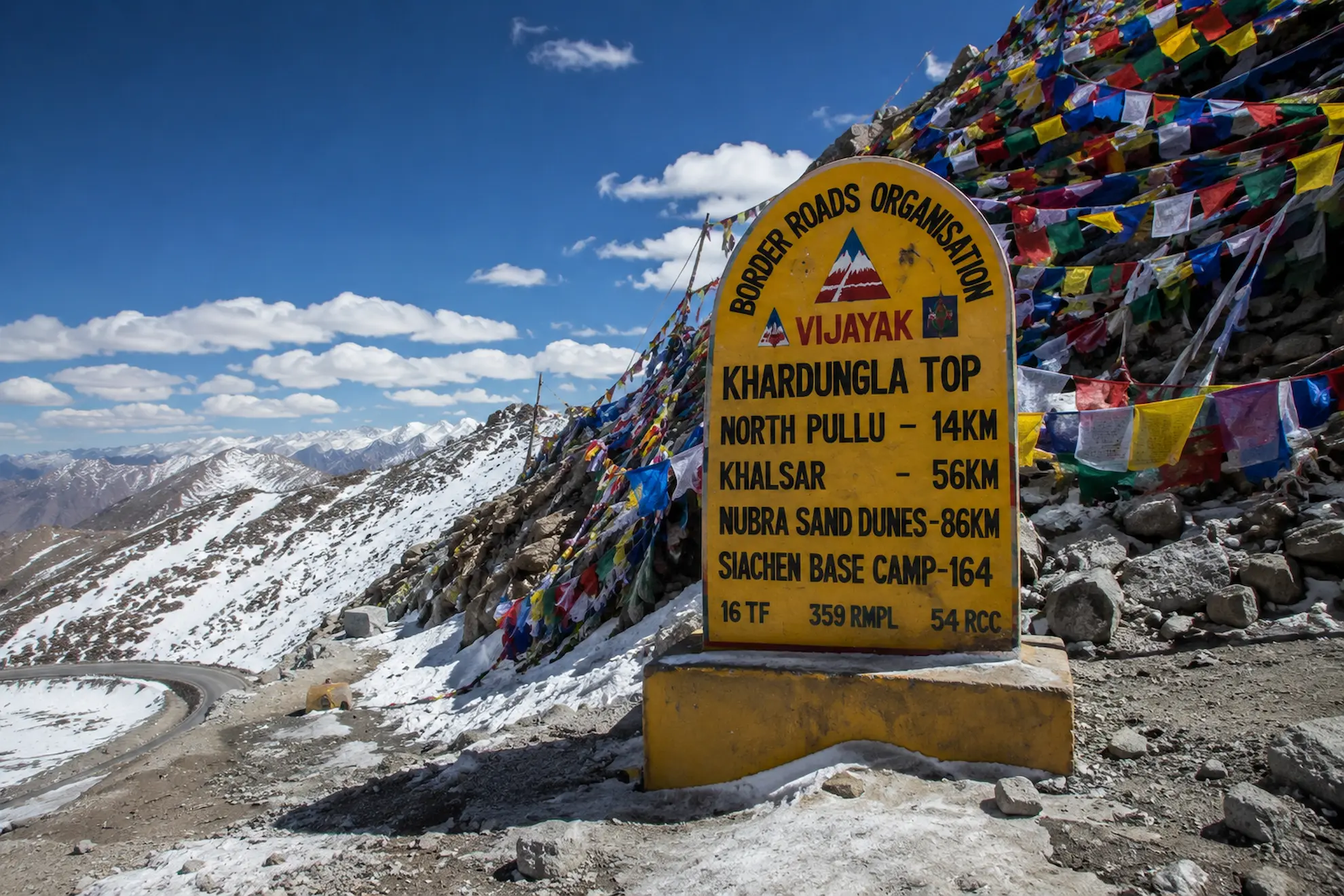
Khardung La — at 18,380 feet, one of the world's highest motorable passes — connects Leh to Nubra. Driving over it is not a transit. It is an event. The views from the top require no filter and no words.
Since opening to tourism in 1974 with just 527 visitors, Ladakh has grown to over 525,000 arrivals by 2023 — and is being actively promoted as a global destination at SATTE 2026 by India's Tourism Ministry.
Apricot blossoms in Sham Valley — a rare, fleeting sight. Temperatures 8–18°C by day, sub-zero at night. Leh accessible by air. Manali highway still closed.
Manali–Leh highway reopens. Hemis Festival (June 2026) — one of Ladakh's most celebrated Buddhist festivals with masked dances. Fewer crowds than July–August.
All attractions fully open. Pangong, Nubra, Tso Moriri all accessible. Warmest months (15–25°C in Leh). Book 3–4 months in advance. Highest prices of the year.
Clear blue skies, cooler air, quieter roads. All passes open, Pangong and Nubra fully accessible. The Ladakh Festival runs in early September — best overall balance of weather, experience, and value.
High passes close progressively from mid-October. Temperatures drop sharply at night. Still viable for early October. Srinagar–Leh route stays open longest.
The frozen Zanskar River trek — for experienced, well-equipped adventurers only. Temperatures to -20°C. Only Leh accessible by air. Not for first-timers.
⚠ THE 48-HOUR RULE — NON-NEGOTIABLE
In 2026, the Leh District Administration enforces a mandatory 48-hour acclimatisation period before permits are issued for Nubra and Pangong. Your Environmental Development Fee (₹400 + ₹20/day) cannot be generated until 48 hours after arrival in Leh. We build this into every itinerary — it is the single most important thing to get right.
All packages ex Leh. Flight connections from Bengaluru, Delhi, Mumbai & Hyderabad available through our team.
Altitude sickness is the number one reason Ladakh trips fail. We build the mandatory 48-hour acclimatisation period and gradual ascent into every itinerary. Leh → Nubra → Pangong → high passes — never the other way around.
Nubra Valley, Pangong Lake, Tso Moriri, and Hanle all require Environmental Development Fee permits since 2026. We manage the entire process — you focus on experiencing Ladakh, not navigating bureaucracy.
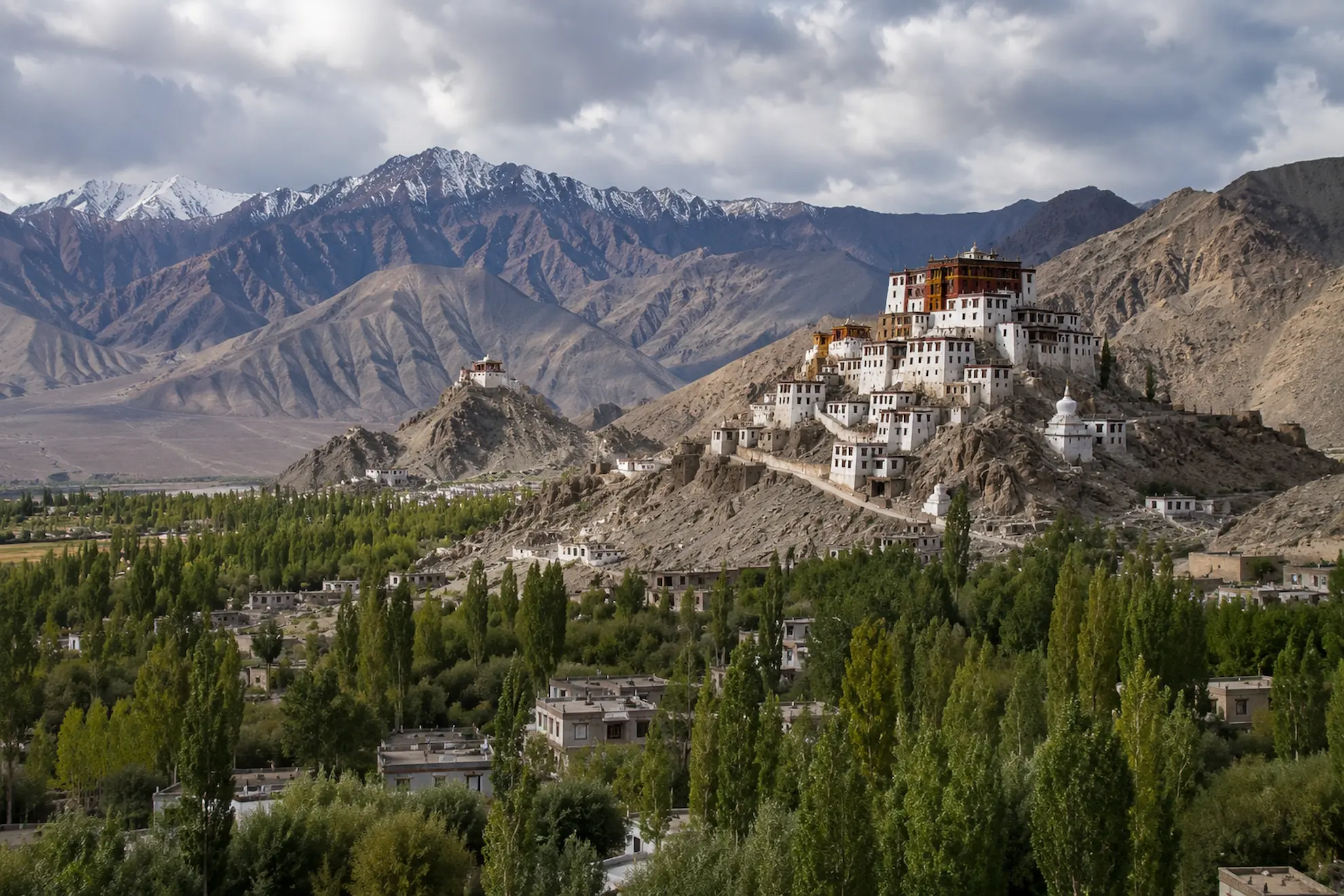
A heritage hotel in Leh. A Nubra Valley camp within earshot of the Shyok River. A Pangong lakeside tent where you wake up with the water at your feet. Stays that are part of the Ladakh story — not just logistics.
High-clearance vehicle, experienced local driver, medical kit on board, emergency contacts in Leh, contingency routing for road closures — we've thought through everything so you don't have to.
From 527 visitors in 1974 to over half a million today. Ladakh is a fast-emerging global tourism destination — and the government is investing heavily in infrastructure to support it.
Visitors to Ladakh by 2023 — up from just 527 when it first opened to tourists in 1974
Zoji La Tunnel under construction — will enable year-round Srinagar–Leh connectivity for the first time
Ladakh featured as a flagship destination at India's biggest travel expo — global tourism push underway
Khardung La pass height — one of the world's highest motorable roads, now a global bucket-list milestone
“Ladakh is one of those places people dream about for years… and then keep postponing. Until they finally go — and realise it was worth every single moment.”
— Travel Unbounded team, on the Ladakh experience
May to September is the main window when roads are open and all attractions are accessible. June and September are our top picks — June for the Hemis Festival and fewer crowds, September for crystal-clear skies, the Ladakh Festival, and quieter roads. July–August is peak season with maximum activity but also maximum crowds and prices. For apricot blossoms, April–May is magical but the Manali highway is still closed.
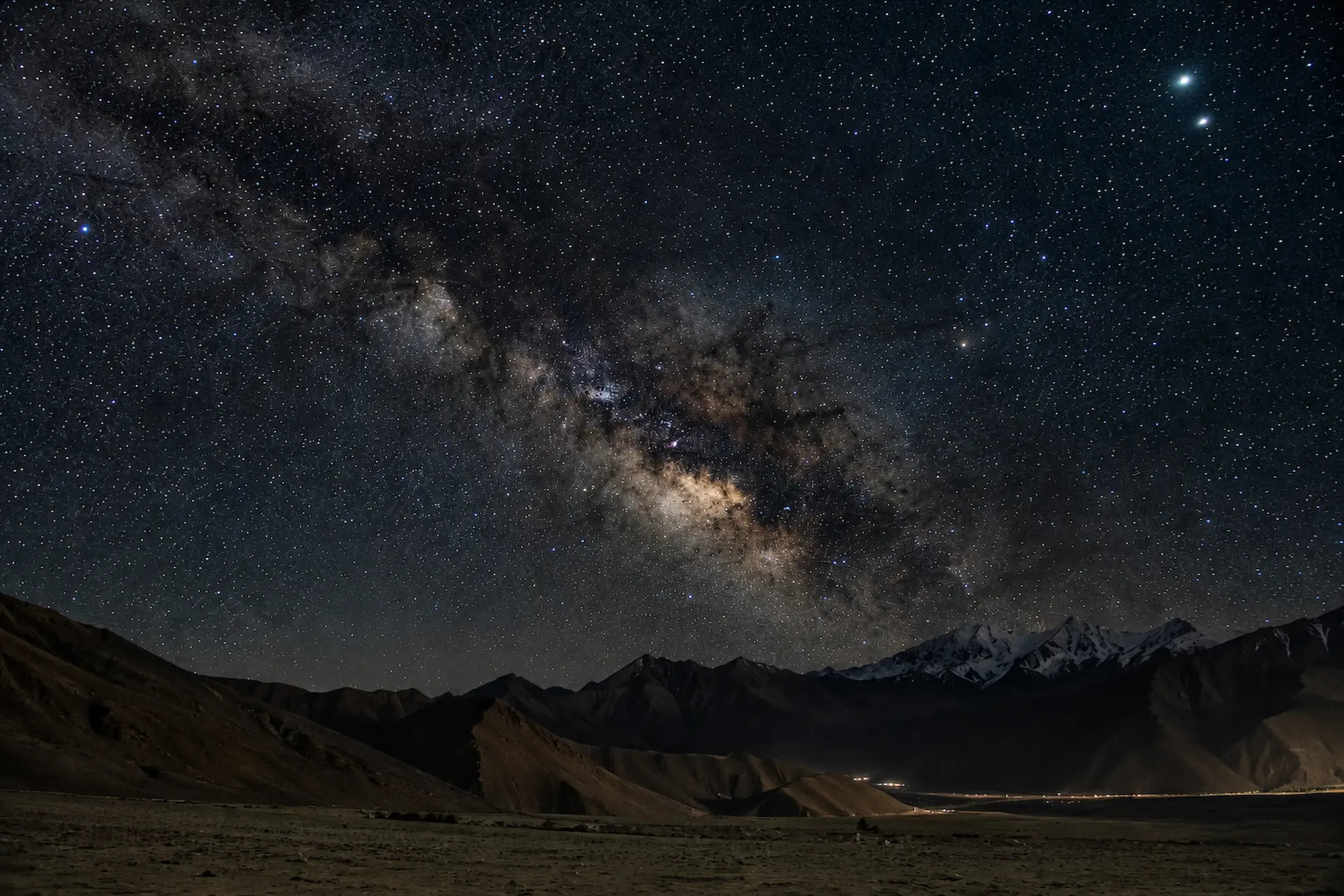
Pangong at sunrise. The sand dunes of Nubra. The Milky Way over Hanle. These are not experiences you keep deferring to someday. The 2026 season window is open — and closing.